

 Hrvatski
 Italiano
 Deutsch
 Français
Attractions
Attractions
Zadar is both, an atmospheric time machine and an open-air museum. Here on display, you will find some of the most beautiful monuments of architecture and cultural heritage of the eastern Adriatic coast. Its city walls are the ancient guardians of this still vibrant historic museum in the open, end they were rightly added to UNESCO's World Heritage List.

Stomorica Church
Read moreThe floor plan of the Stomorica Church in Zadar resembles a key, and according to tradition, it symbolizes St Peter's keys. Today only the base of that hexafoil Pre-Romanesque church, which was once dedicated to St Ursula, is preserved.

Arsenal
Read moreThe Arsenal of Zadar dates back to the 16th century. This large port warehouse was expanded in 1752 under the rule of providur (overseer) Jeronim Marija Balbi, to which the inscription on the plaque on the front of the building testifies.
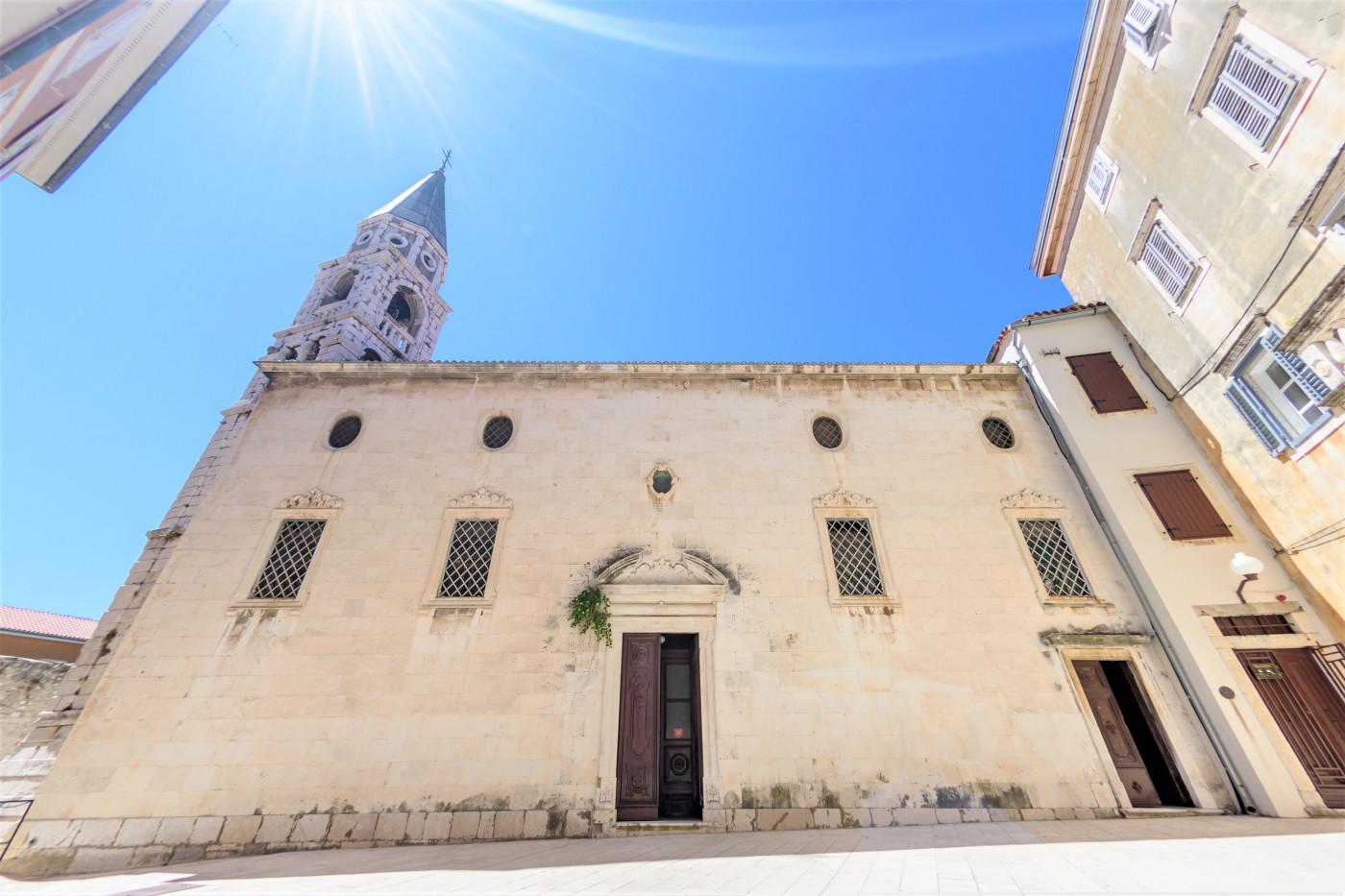
Church of St Elias the Prophet
Read moreThe Church of St Elias the Prophet in Zadar is located on the Roman Capitoline. It was constructed in the 16th century on the spot of the Medieval catholic church of the same name. It was adapted in the 18th century in Late-Baroque style, and it preserves a rich collection of icons dating back from the 16th to the 18th century.

Kalelarga
Read moreFrom the most ancient times in Zadar, known as Via Magna, Strada Grande or Ruga Magistra, Kalelarga has been the main street of the city. To Zadar citizens it is much more than that. It is the main urban artery, a cult space and the symbol of the city, to which the most beautiful memories are associated.

Forum
Read moreThe Forum in Zadar was built by the first Roman Emperor Gaius Julius Caesar Octavian, as witnessed by the stone inscriptions dating back to the 3rd century, when the construction finished. It was once enclosed by a portico with galleries on the first floor, and under the portico there used to be shops and stalls.

Greeting to the Sun
Read moreThe new symbol of Zadar is located in the Zadar port on the western point of Zadar Peninsula. The Greeting to the Sun is overlooking the Zadar Channel, the islands and the world-famous sunset. With this installation, Zadar has got a new tourist attraction.

Barkajoli, the Rowing Boatmen of Zadar
Read moreFrom early morning to late evening, the Barkajoli take passengers and tourists with a little rowing boat across the Zadar peninsula to mainland and back, thus cultivating, according to some daring explorers, a 3,000-year-old tradition.

Historic District of Varoš
Read moreIf Kalelarga has been the most important Zadar street and bloodstream of the city since antiquity, the historic district of Varoš is a symbol of a new Zadar. Its narrow streets are imbued with a life atmosphere that radiates comfort and moves slowly through the morning. Scenes of everyday ritual meetings and socializing, endless chit-chat (ćakula) and feasts take place in Varoš. Varoš is an exhibition space of a living city.

University of Zadar and the Chapel of St Demetrius
Read moreThe impressive building of the University of Zadar on the seafront was built at the beginning of the 20th century in Neoclassicist style for the needs of the former Lyceum of St Demetrius. The first University in Zadar was founded way back in 1396, and it was re-established in 2002.

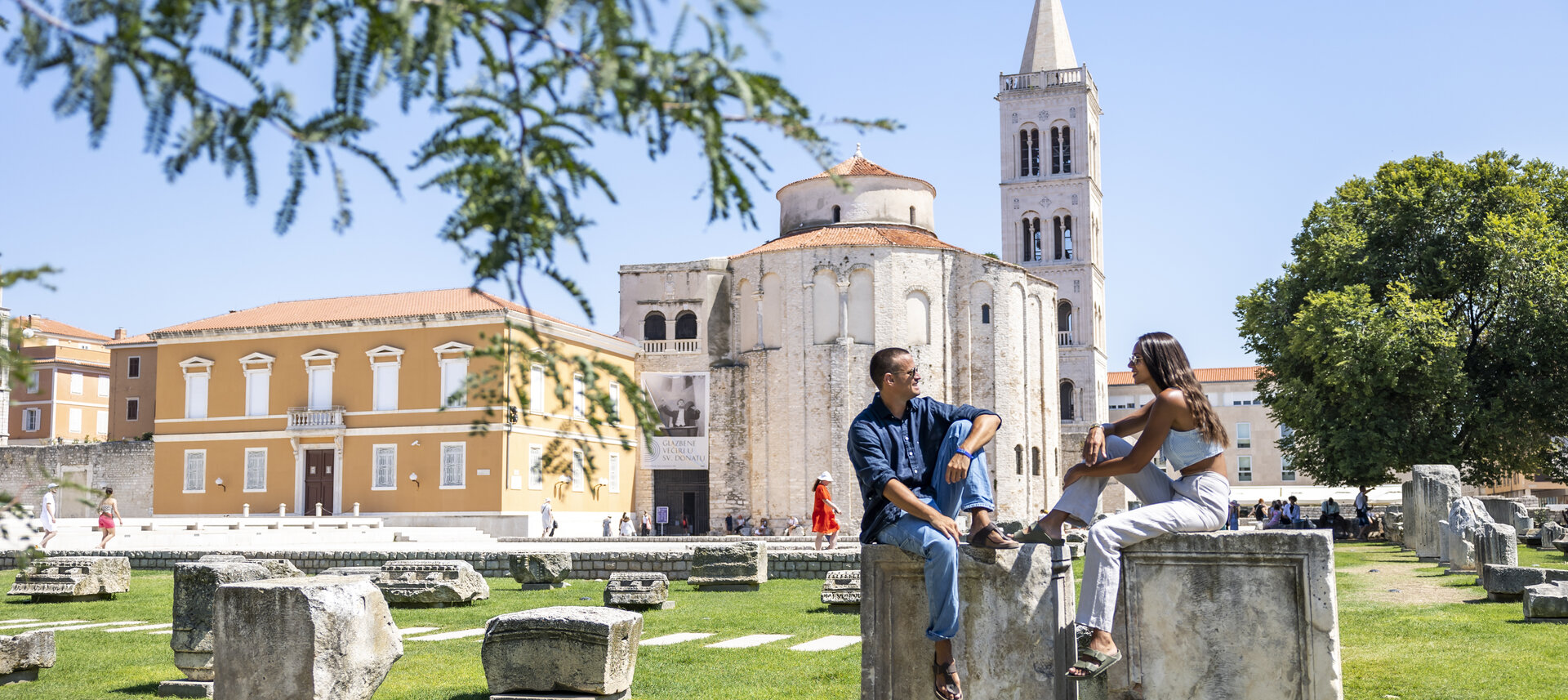
Church of St Donat
Read moreThe Church of St Donat in Zadar has long been desacralized, meaning no liturgies are held here, and from the end of the 19th century until 1954 it housed the Zadar Archaeological Museum. As St Donat has exceptional acoustic characteristics, it has been the venue for Renaissance music festivals for decades.

Zadar Seafront - Riva
Read moreThe Zadar seafront called Riva, is a place of meeting, gathering and happenings, as well as a place for pleasant strolls with the view over the Ugljan and Pašman islands, and the endless open sea to the northwest. It is embellished by magnificent palm trees, ancient holm oaks and other lush vegetation.

Church of Our Lady of Health
Read moreThe painting of the Lady of Castello, painted by Blaž Jurjev Trogiranin (Blaise de Trogir) in the 15th century, was preserved in the Church of Our Lady of Health, and today it is a part of the permanent display of the Exhibition of Religious Art, the so-called Gold and Silver of Zadar. The church has been very popular among many generations of Zadar citizens.