
Attractions
Attractions
Zadar is both, an atmospheric time machine and an open-air museum. Here on display, you will find some of the most beautiful monuments of architecture and cultural heritage of the eastern Adriatic coast. Its city walls are the ancient guardians of this still vibrant historic museum in the open, end they were rightly added to UNESCO's World Heritage List.

Church of Our Lady of Health
Church of Our Lady of Health
The painting of the Lady of Castello, painted by Blaž Jurjev Trogiranin (Blaise de Trogir) in the 15th century, was preserved in the Church of Our Lady of Health, and today it is a part of the permanent display of the Exhibition of Religious Art, the so-called Gold and Silver of Zadar. The church has been very popular among many generations of Zadar citizens.

Church and Monastery of St Michael
Church and Monastery of St Michael
The Church and Monastery of St Michael is in a possession of a collection of artefacts, the most valuable of which are the painting of Our Lady of Snow, dating back to the beginning of the 17th century, Saint Lucy by an unknown painter, the Last Supper, and the Flagellation of Christ, all three from the 16th century.
Parks
Parks
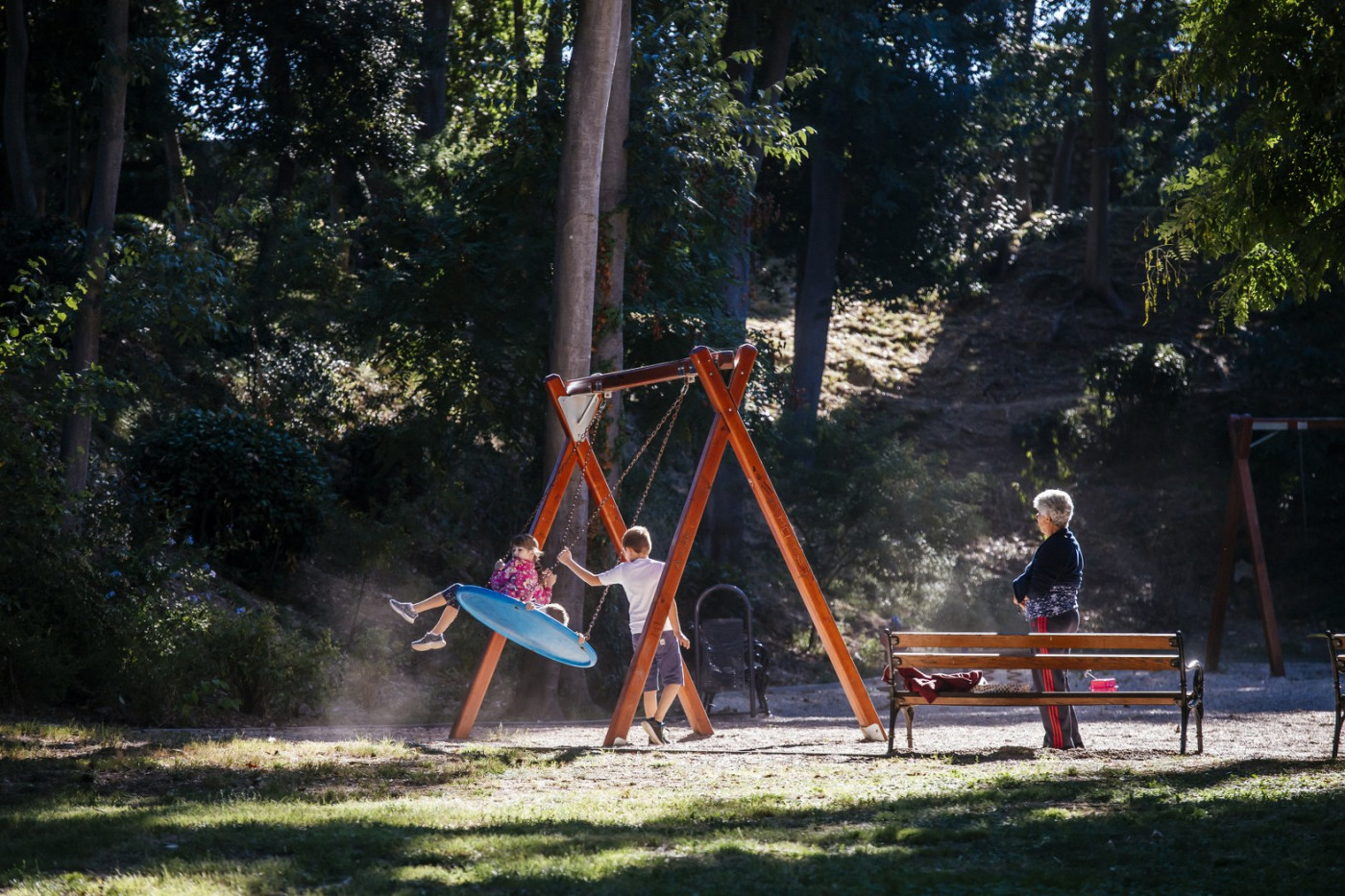
The essence of Zadar lies in its ancient stone face, mottled with green abundance and historical parks. The surroundings enrich the city with natural beauties, its history provided it with landmarks, and its parks demonstrate the city’s urbanity and nobility.

Zadar Sphinx
Zadar Sphinx
The stories about the Zadar Sphinx, and the treasure buried under it, were the inspiration for numerous fantasies by generations of Zadar citizens.
Church of St Simeon
Church of St Simeon
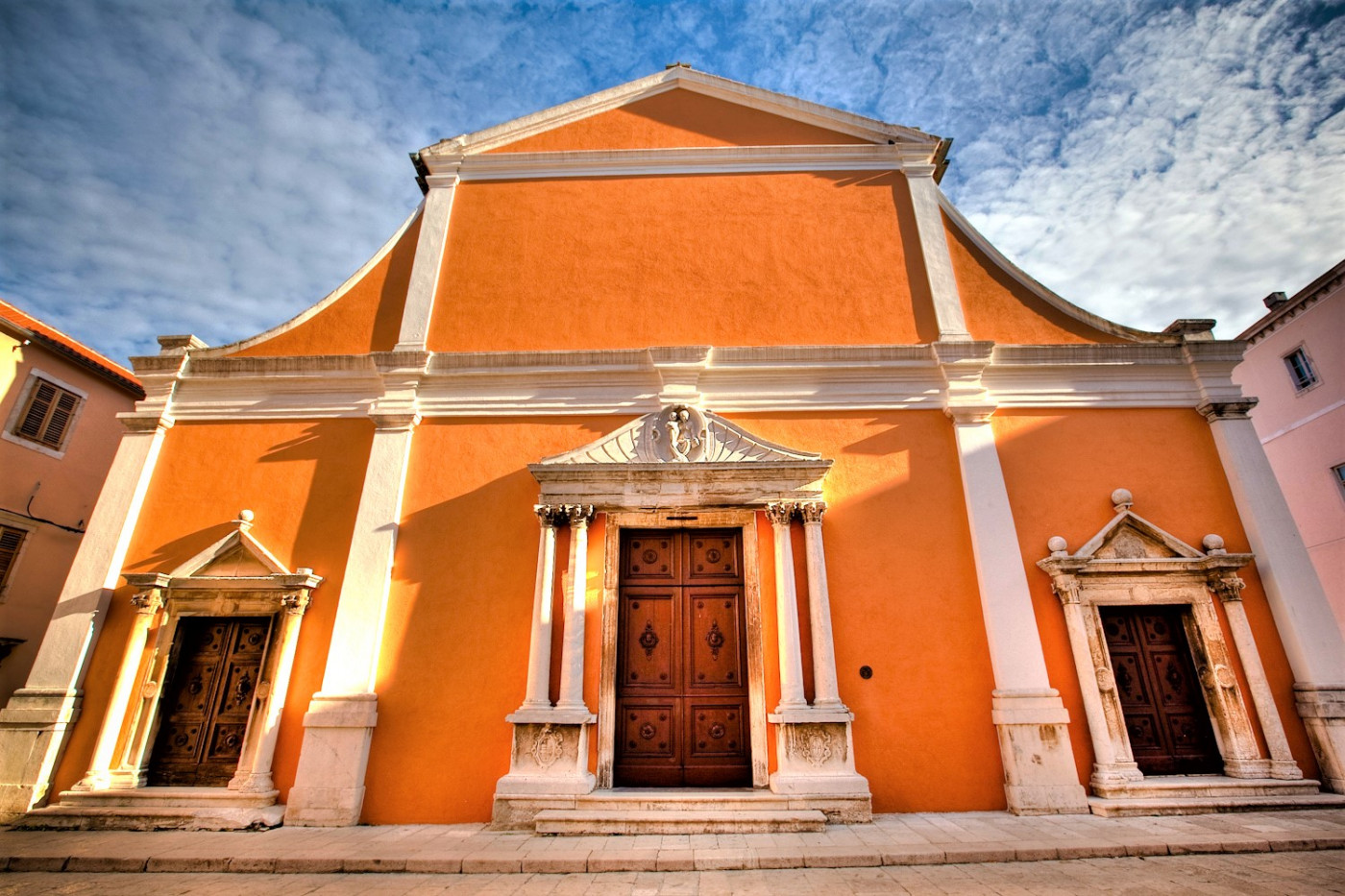
Initially, the Church of St Simeon in Zadar was an Early Christian three-nave basilica, then a Gothic building, and later a monument of provincial Baroque characteristics. On its main Altar there is a silver casket with the relics of St Simeon, dating back to 1380.

Forum
Forum
The Forum in Zadar was built by the first Roman Emperor Gaius Julius Caesar Octavian, as witnessed by the stone inscriptions dating back to the 3rd century, when the construction finished. It was once enclosed by a portico with galleries on the first floor, and under the portico there used to be shops and stalls.

A 3D Sculptural Representation of the Historical City Centre of Zadar
A 3D Sculptural Representation of the Historical City Centre of Zadar
Every now and then, strolling along the famous Zadar city walls, which the people of Zadar call Muraj, uncovers some new surprises. New ways of interpreting our city are emerging in a quiet manner. Why is that? Because Zadar has a lot to say.

Sea Organ
Sea Organ
Zadar is a proud owner of a unique blend of architecture and music, the world-famous Sea Organ, which is located right next to another modern installation, the Greeting to the Sun. The sounds that the Sea Organ produces are a result of the release of sea energy, or rather waves and tides.

Foša
Foša
Foša is a municipal little harbour in Zadar and one of the symbols of the city. Because of its centuries-old atmosphere and position next to the Renaissance ramparts, it is one of the favourite places to go for a stroll, to take photographs and to enjoy the lavish harbour colouring.
Churches
Churches
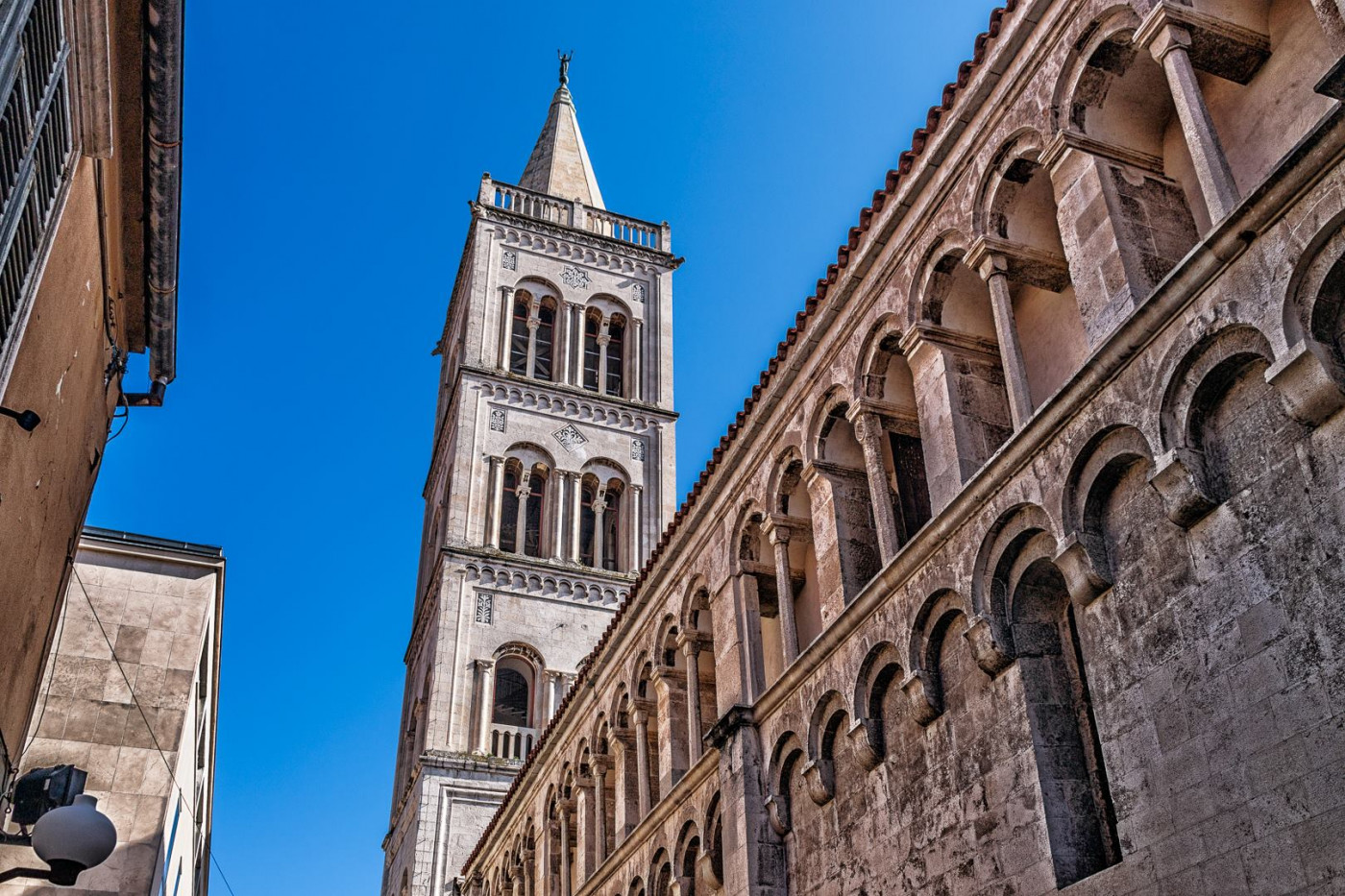
When the legendary traveller, Jason, founded Zadar with his Argonauts, according to a Zadar poet, it just might be that the original ground stone built in its foundation was a sanctuary. On a small space, during a long period, churches have been built one upon the other older, as evidence of continuity of the spiritual life of its citizens.
Church and Monastery of St Francis
Church and Monastery of St Francis
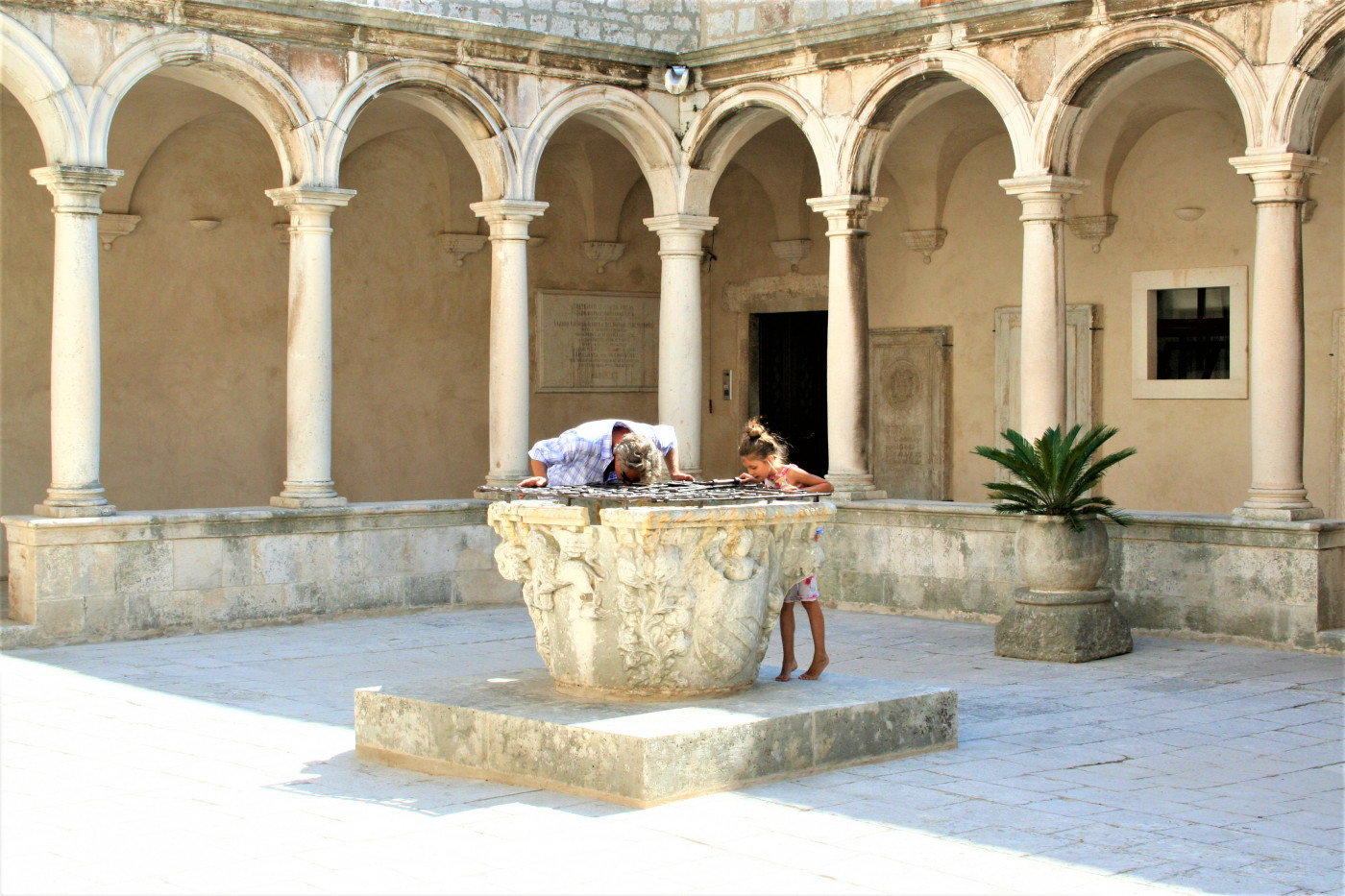
The Church and the Monastery of St Francis in Zadar, from 1283, is the oldest Dalmatian church built in Gothic style. In 1358 the Zadar Peace Treaty was signed between the Republic of Venice and the Hungarian-Croatian king Louis I in its Sacristy.
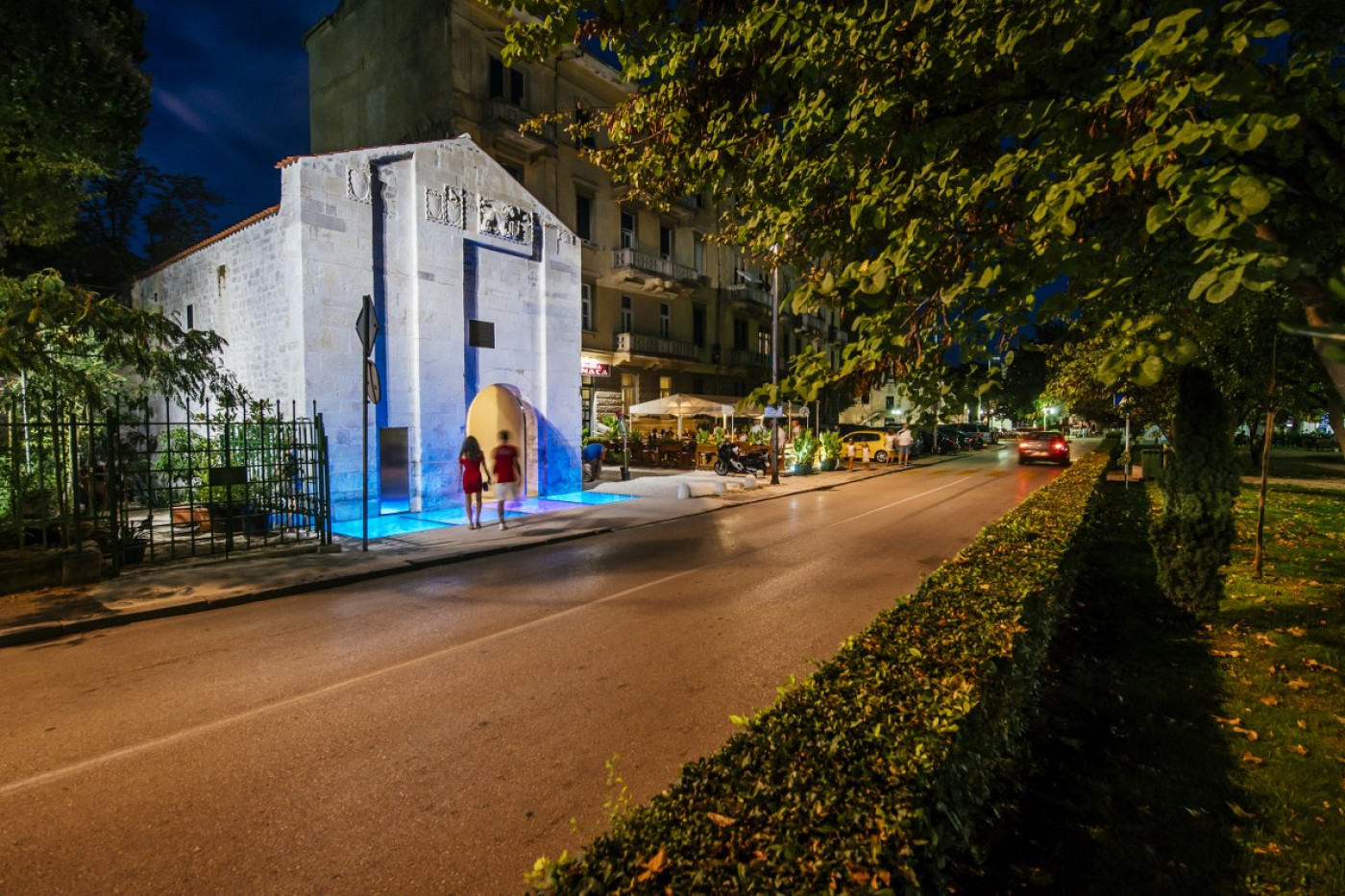
Small Arsenal
Small Arsenal
The Small Arsenal in Zadar is a protected monument of culture and a part of the Medieval Castle (Kaštel), a separate structure that has been integrated in the defensive system of the city walls. Only some parts have been preserved, among which is the lower part of the entrance tower that was later transformed into a gunpowder warehouse.
.